
People will use behaviour as a form of communication if they can’t express themselves in any other way.
Every behaviour has a reason and sometimes we need to figure out what that reason is.
Some people will use some verbal speech along with signing, Makaton and gestures.
Many people will have their own personalised signs and gestures.
Some people like to repeat the last word or phrase they heard. Called echolalia, it can be immediate or delayed, while some people may become more echolalic when they are anxious.
It is important to remember that a person displaying echolalia may not understand the language they are repeating.
A good rule is to ‘Keep It Short & Simple’ in terms of communication through language and to allow time for the person to process the language.
This is an important approach to apply when communicating with people on the autism spectrum.
This method of communication is commonly used for people with autism. It is based around the person exchanging pictures for an item that they want or need.
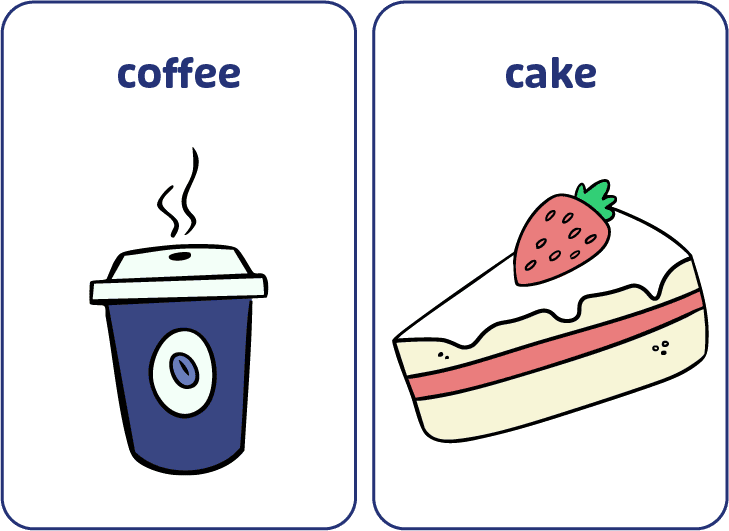
Many people with autism understand visual information better than verbal information. This can be in the form of written text, symbols, pictures, photographs, and gestures.
A Total Communication approach involves a combination of methods of communication which are used together to aid understanding and support effective communication. Many people with autism will benefit a great deal from a Total Communication approach.
Responsive communication has developed based on research into how people learn to communicate in their first year. It also acknowledges various sensory differences. There are three stages:
First we observe the person and recognise behaviours that they are doing and that have meaning for them. Then follows mirroring of these behaviours, if appropriate, and responding in a similar rhythm or behaviour.
A slight change in the mirroring or rhythm will draw attention from the person’s internal experience to a communal experience. It supports emotional engagement between both people through shared eye contact and interaction, and allows for communication without words.

Processing delays can vary from person to person. They can last seconds, minutes, hours or even days. Many people with autism need extra time to process information.
This can make two-way communication or conversation difficult. When communicating with someone with autism, give them time to process and respond. If you need to ask the question or give the information again then use the same language.
Some people with autism may not understand that communication is a two-way process. They may not realise that they need to engage with another person when communicating to make requests.
They also may not realise when a person is communicating with them, even if the attention is being directed towards them. It is always advised to say the person’s name before you start to speak to an individual with autism.
It is generally accepted that unless you know for sure the other person understands sarcasm, and you know each other well, then sarcasm is best avoided.
Many people with autism take language literally, so it is advised we avoid metaphors and idioms, such as: “It’s raining cats and dogs.” or “opening a can of worms.”
Be clear and specific in what you are saying and use language as it is meant to be used.

Others |
|
| Other uncategorized cookies are those that are being analyzed and have not been classified into a category as yet. | |
Necessary |
Necessary |
| Necessary cookies are absolutely essential for the website to function properly. These cookies ensure basic functionalities and security features of the website, anonymously. | |
Advertisement |
|
| Advertisement cookies are used to provide visitors with relevant ads and marketing campaigns. These cookies track visitors across websites and collect information to provide customized ads. | |
Analytics |
|
| Analytical cookies are used to understand how visitors interact with the website. These cookies help provide information on metrics the number of visitors, bounce rate, traffic source, etc. | |
Functional |
|
| Functional cookies help to perform certain functionalities like sharing the content of the website on social media platforms, collect feedbacks, and other third-party features. | |
Performance |
|
| Performance cookies are used to understand and analyze the key performance indexes of the website which helps in delivering a better user experience for the visitors. | |
This website uses cookies to improve your experience while you navigate through the website. Out of these, the cookies that are categorized as necessary are stored on your browser as they are essential for the working of basic functionalities of the website. We also use third-party cookies that help us analyze and understand how you use this website. These cookies will be stored in your browser only with your consent. You also have the option to opt-out of these cookies.